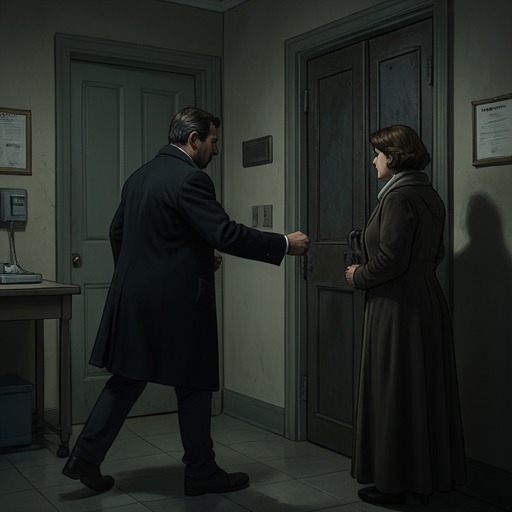
Zed
After Ever HappyZed occupies an uneasy place in Tessa’s life: he can arrive as a welcome friend in her grief, yet later surprise her with an unwanted kiss and become a flashpoint in her turbulent relationship with Hardin. The contrast between his attentive presence at her father’s funeral and his presumptuous advance makes his role more complicated than that of a simple ally or rival. The evidence leaves parts of his history with Tessa unspecified, but shows how his actions and the assumptions others make about him shape the emotional pressure around her.
Identity and Introduction
Zed first appears in these scenes at Tessa’s home on the day of her father’s funeral. She expects Hardin when she hears her mother call from the hallway, since Hardin has been giving her the space she requested and she had suspected he might visit that day. Instead, she finds Zed in the doorway. The surprise is pleasant: when their eyes meet, his uncertainty gives way to a bright smile, and Tessa responds with a grin of her own.
Their greeting is physically familiar. Tessa invites Zed inside and wraps her arms around his neck; he hugs her so tightly that she coughs theatrically before he loosens his hold. The moment establishes genuine ease and affection between them, while also showing how quickly a reunion can become physically intense. At this point, however, Tessa welcomes the contact and is glad he has come.
Support During Tessa’s Grief
Tessa initially wonders how Zed learned about her father’s death. She has not called him, and her phone has been disconnected. Zed explains that Hardin called him and asked him to come see her; because he could not reach Tessa directly, Zed had to take Hardin’s word that she needed someone. His arrival, then, is not presented as the result of Tessa seeking him out, but as a response to Hardin’s request.
Zed is careful to leave Tessa room to refuse his presence. He reaches out but stops short of touching her, asks whether she minds that he came, and says he can leave if it is too much. His explanation that he knew things must be bad if Hardin had called him makes the visit both an act of friendship and a sign of how serious Tessa’s circumstances appear to those around her. Tessa does not tell him to go; his willingness to stay without demanding access matters in a scene shaped by her loss.
At the church, Zed again asks permission before joining her, acknowledging that Hardin is there and that Tessa may not want him to come along. He notes that Hardin was the one who called him in the first place. Tessa agrees, pointing out that Zed drove all the way there. His inclusion does not erase the tension surrounding Hardin: Tessa scans the parking lot when Hardin’s name comes up, sees Landon and Ken leaving together, and cannot find Hardin. During the funeral she has also worried that Hardin might reveal the painful truth about Christian Vance to Ken at the wrong moment. Zed is thus present as a companion while Tessa remains alert to the separate crisis unfolding among Hardin and his family.
The Kiss and the Rainy Confrontation
The friendship takes a sharply different turn when Zed kisses Tessa. He presses his lips to hers, moves his hands into her hair, and pushes his tongue into her closed mouth. Tessa gasps in surprise; Zed treats that response as an invitation and presses his body against her, forcing her back onto the mattress. She shoves him in the chest. Although he hesitates, he continues trying to kiss her until he finally lets up, and Tessa asks what he is doing.
The scene makes the difference between earlier and later physical contact unmistakable. Tessa had welcomed his embrace at the funeral; she does not welcome the kiss. Her body’s quick resistance and direct question interrupt any reading of the advance as mutual. The evidence does not explain what Zed believed or what preceded the moment in full, so his motive cannot be confidently supplied. What it does show is that he goes further after Tessa’s surprise and does not immediately stop when she pushes him away.
In a later rain-soaked encounter, Zed arrives in his truck, leaves it running, and rushes toward Tessa. Hardin steps between them, silently warning Zed not to come closer. Hardin then demands to know what Zed did, while Zed counters by asking what Tessa told him. Their exchange confirms an existing conflict around Zed’s conduct, though the excerpt does not disclose its full circumstances. For Tessa, the scene is another recurrence of a cycle she says has taken pieces from her each time it repeats. Zed’s arrival does not resolve that cycle; it becomes part of the confrontation she would rather not experience again.
Relationships and Narrative Significance
Zed’s connection to Tessa is described differently by different people. Later, Nate says Zed is the only one who talks to Tessa after she and Hardin stopped answering calls. Hardin snaps that Zed does not talk to her and insists that Zed is nothing to her. Nate explains that Zed told the group about Tessa’s father and said he attended the funeral. The contradiction is telling: Zed has in fact been present with Tessa, but Hardin resists the implication that this makes him important to her. Hardin’s dismissal does not undo the funeral visit or settle what the relationship means; it reveals how quickly Zed’s name provokes him.
Zed also surfaces in a later conversation between Tessa and Hardin, when Tessa raises the things Hardin has done to her, including “all the stuff with Zed.” The reference confirms that Zed is tied to a grievance in their relationship, but does not specify its details. Hardin answers that Zed has no place in that conversation and redirects the argument toward the mistakes both he and Tessa made while learning how to be in a relationship. In a separate intimate scene, Hardin asks Tessa what she came to tell him and finds Zed’s face surfacing in his thoughts. These brief returns make Zed a persistent point of tension even when he is not present.
Zed’s narrative function rests on this unresolved contrast. He can be the friend Hardin summons when Tessa is grieving, and the person Tessa later resists when he crosses a physical boundary. His presence tests the distance between care and entitlement, while Hardin’s reactions turn him into a measure of jealousy, mistrust, and contested closeness. The available scenes do not provide a final account of Zed’s relationship with Tessa; instead, they leave its contradictions visible—welcome companionship, unwanted intimacy, and a name that continues to sharpen conflict between Tessa and Hardin.